
Please see below all of the speakers already confirmed for 2027.

Name : Stephen Miller
Company: AWE
Job Title: Explosives Engineer
Topic Title: Shaped Charges 101
Personal Bio: At the age of 17, Steve joined the Territorial Army (UK Reserve Forces) and qualified as a Bomb Disposal Engineer, while still at school! Later becoming a higher qualified EOD Engineer, Combat Engineer and Ammunition Specialist.
The Royal Armaments Research and Development Establishment (RARDE) – Part of the UK Ministry of Defence, recruited Steve as a research scientist in their warheads and terminal effects department at Fort Halstead, where he was involved with:
Defeat of Concrete, Anti-Armour Warheads, Large Calibre Kinetic Energy Penetrators, The ‘Old Fort’ in house high explosive facility, Explosives Technical Support to various projects, Explosives Competencies, Oil Rig Decommissioning, and the development of Increased Performance Explosive Perforating Tools for the Oil Industry.
Outside of his main employment Steve started doing presentations and demonstrations of pyrotechnic special effects. This lead to a much deeper interest in the subject of pyrotechnics special effects and explosives in general. Steve has since provided explosive special effects for numerous film productions, stage shows and live battle simulations.
This personal and professional interest in explosives lead Steve to pursue membership of the Institute of Explosives Engineers. In 1997 he became a full Member of the Institute and was invited to join the Institutes Council, where he served until stepping down in 2005. Steve re-joined the Institute Council in 2017 till 2023.
The Institute of Explosives Engineers gave Steve a wider view of many aspects of the explosives industry and related technologies, materials and techniques. This wealth of knowledge and understanding now means that Steve is regarded as a subject matter expert and works as an expert witness on explosives use and misuse for both UK and international courts.
Steve also delivered lectures and demonstrations on explosives and related subjects to various and varied audiences, including schools (as a STEM Ambassador) conferences, YouTube, television, and radio appearances.
In 2016 Steve became a Chartered Engineer through the Institute of Explosives Engineers and is now a mentor and assessor for others seeking similar professional registration. In 2021 Steve earned an MSc in Explosive Ordnance Engineering and was recognised as a Fellow of the Institute of Explosives Engineers due to his long-term support and services to the explosives industry.
Abstract: An introduction to Shaped Charges (accompanying a series of articles in ‘Explosives Engineering’), covering the basics, discussing the various concepts and elements that affect the performance of shaped charges and how we can tune the physical features of shaped charges to achieve the desired target effects.
As with the articles, this presentation will dispel some myths and misconceptions, look into the equations that define shaped charge performance, what affects physical features have on shaped charge performance and how different initiation systems can be used to boost performance and adjust other factors of interest.

Name: Colin King
Company: Fenix Insight Ltd
Job Title: Chief Intelligence Officer
Topic Title: EOD Challenges in Ukraine
Personal Bio: Colin King has 40 years of operational explosive ordnance disposal (EOD) experience, specializing in the disassembly and analysis of live munitions.
Colin served as a bomb disposal officer in the British Army, with operational tours including the Falklands, Gulf, Bosnia and Kosovo. He instructed at the British EOD School and spent many years in military intelligence, also leading the first British team to train Afghan deminers before his final tour with the Gurkhas.
For 17 years, Colin wrote the leading technical reference works on landmines and EOD for Janes Information Group. He is now the Chief Intelligence Officer of Fenix Insight Ltd, a weapons intelligence company that has pioneered approaches to the disassembly, analysis and disposal of ordnance in more than 30 countries.
Abstract: An update to Fulmination 2025 presentation.
Fenix has worked in Ukraine several times during the current conflict, recently completing another deployment. These operations have included the recovery, render-safe and exploitation (breakdown and analysis) of new and unusual Russian munitions.
The presentation illustrates the extraordinary breadth of the technical threat, along with the EOD-related consequences for a post-war return to normality. The talk is illustrated with unique imagery from front-line areas and intimate detail of the weapons themselves. The result is a startling revelation of the residual risk, concluding that western EOD assets are woefully ill-prepared for the situations they may face.

Name : Stephen Ingram
Company: Mines Advisory Group
Job Title: Global Technical Advisor
Topic Title: MAG’s Approach to Innovation in Humanitarian Mine Action
Personal Bio: A former British Army Ammunition Technical Officer, Steve has worked with both the HALO Trust and the Mines Advisory Group (MAG), leading operations and providing technical oversight across Africa, the Middle East, Europe, and Southeast Asia. Since 2023, he has served as MAG’s Global Technical Advisor (HMA). In this role, he is responsible for global technical compliance, operational safety, and the development of standards, training, and mechanical clearance capabilities. He also represents MAG on IMAS Review Boards, drives research and development initiatives, and leads the harmonisation of global Standard Operating Procedures.
Abstract: For more than three decades, MAG has worked in communities affected by landmines, explosive ordnance and poorly managed weapons and ammunition. Across these programmes, a consistent set of operational challenges continues to slow humanitarian response, increase risk to personnel and limit how quickly land can be safely returned to communities. Despite progress in standards, methods and information systems, core constraints remain, including identifying where contamination is most likely, distinguishing hazards from debris, safely excavating buried ordnance and managing the large scale destruction of weapons and ammunition.
At the same time, advances in areas such as artificial intelligence, robotics and geospatial analysis present new opportunities to address these challenges. Drawing on operational experience, MAG has identified six priority areas for innovation: predictive prioritisation, precision hazard detection, smart mechanical systems, efficient excavation, industrialised destruction and scalable digital systems. These priorities reflect real operational needs, and progress will depend on collaboration between humanitarian organisations, research institutions, technology companies and operational partners to deliver practical, field ready solutions that improve safety, efficiency and recovery for affected communities.

Name : Steven Holland
Company: SJH Projects Ltd
Job Title: Managing Director
Topic Title: Making Brain Waves
Personal Bio: Steve Holland has run SJH Projects Ltd since 2002. Prior to that his background was in the high performance materials industry, starting at BAe Space Systems. A later project to develop a blast resistant baggage container in the aftermath of the Lockerbie bomb, combined his background in novel materials, the military and an understanding of explosive effects. This model has been pursued under SJH Projects with a number of novel designs brought to market.
SJH also undertakes the independent planning, control and reporting of testing for others, from small stand-alone equipment such as litter bins through to full scale military vehicle underside blast testing. SJH also undertakes consultancy on the vulnerability of buildings to blast effects, Hostile Vehicle Mitigation and the associated Vehicle Dynamics Assessments. The problem solving with novel materials has also found its way into supporting the world of expeditions – which is both interesting and has no money.
Abstract: Mild Traumatic Brain Injury (mTBI) has become known as a signature injury from the conflicts in Iraq and Afghanistan. The emerging prominence of this issue is partly attributable to improvements in protection and coverage of body armour. Better protection of blast sensitive organs in the torso has exposed an issue for the brain that was always there, but obscured.
The presentation will discuss the injury mechanisms and show some research using a synthetic headform to measure the intracranial pressure waves and how it compares with cadaveric data. Such tools will allow for comparative testing of protection systems.
It will then finish with a look at how head protection on the battlefield is likely to change and how it might balance a wide range a conflicting practical and performance requirements.
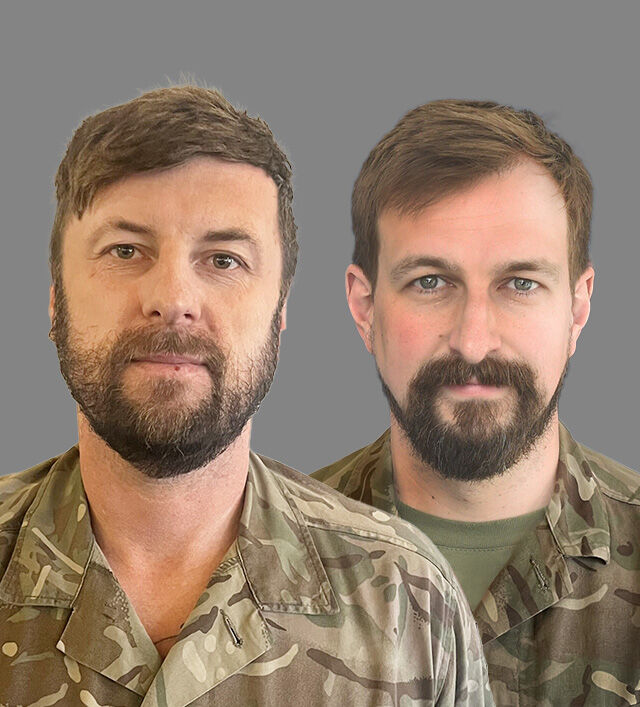
Name : Liam Kidman & Maj Andrew Boyce
Company (Liam): British Army – 11 EOD&S Regt RLC
Company (Maj Andrew): 11 Explosive Ordnance Disposal & Search Regiment
Job Title (Liam): Squadron Duty Officer, 11 EOD Regt RLC
Job Title (Maj Andrew): Operations Major
Topic Title: Bomb Disposal Bronze and Silver Commanders during four Major Incident in the UK
Personal Bio: Liam Kidman – Professional Biography
Location: Near Cardiff, South Wales
Nationality: British
Liam Kidman is a proud Fellow of the IExpE and IEng. A strategic, adaptable, and results-driven leader with over 20 years of distinguished service in the British Army. Rising through the ranks from Private Soldier to Captain, Liam has demonstrated exceptional leadership, operational command, and crisis management expertise, particularly within the Explosive Ordnance Disposal (EOD) and Search disciplines.
Currently serving as Second-in-Command of 721 EOD Squadron, 11 EOD & Search Regiment RLC, Liam leads a team of over 150 specialist personnel, ensuring operational readiness, professional development, and inter-agency collaboration. His leadership philosophy is rooted in integrity, composure under pressure, and a commitment to developing others through education and example.
Key Achievements
Leadership Excellence: Promoted through every rank, earning the Royal Warrant and commission.
Operational Innovation: Secured £135,000 in funding for operational and training improvements during a Defence-wide financial crisis, enhancing capability and resilience.
Training Transformation: Designed and implemented new instructional methods, increasing qualification pass rates from 25% to 66%, delivering cost savings and boosting readiness.
Strategic Influence: Advised senior commanders (1★ and 2★) on Corps-wide professionalisation and training policy.
International Expertise: Deployed to Afghanistan, Northern Ireland, Bermuda, and Thailand, providing technical leadership in EOD operations and fostering international collaboration.
Royal Protection Operations: Trusted to conduct operations safeguarding the British Monarch and senior UK dignitaries.
Professional Recognition: Consistently rated “Outstanding” in annual reports, described as “setting the Corps standard for professionalism” and “influencing beyond rank.”
Career Highlights
As a Captain and Ammunition Technical Officer, Liam has:
Commanded over 150 personnel delivering national EOD and Search capabilities.
Acted as Silver/Bronze Commander for major incidents, coordinating inter-agency responses with police and civil authorities.
Enhanced interoperability with regional police forces and delivered international EOD support operations.
Mentored junior leaders and championed professional accreditation through the Institute of Explosive Engineers (IExpE) and the Engineering Council.
Previously, Liam served as a Senior EOD Operator and Technical Instructor, earning an “Outstanding Instructor” rating. He contributed to the Force Professionalisation programme, supported high-profile bomb disposal operations, and presented professional research at the Fulmination 2023 Institute of Explosive Engineers Conference.
Education & Professional Development
MSc Executive Leadership and Strategic Studies (expected Dec 2026) – Henley Business School, University of Reading ILM Level 7 Certificate in Strategic Leadership & Management CMI Level 6 & 7 Diplomas in Management & Leadership Diploma of Higher Education – Defence Academy UK (Military Studies) Royal Military Academy Sandhurst – Late Entry Officer Commissioning Course Professional Memberships & Registrations:
Fellow, Institute of Explosive Engineers (FIExpE) Incorporated Engineer (IEng) Engineering Technician (EngTech) Awards & Honours Master General of Logistics Commendation (2023): For securing critical funding, life-saving intervention for a veteran, and charitable service.
RLC Corps Colonel Commendation (2012): For technical and operational excellence in EOD operations.
Long Service and Good Conduct Medal: Recognising 20 years of exemplary service.
Core Skills
Strategic Leadership | Operational Command | Crisis & Risk Management | Stakeholder Engagement | Training Reform | Change Management | Interagency Collaboration | Technical Governance | Innovation & Improvement | Team Development | Professionalisation
Personal Interests
Liam is passionate about property development, charity work, professional development, and outdoor fitness.
Liam Kidman exemplifies professionalism, innovation, and dedication, consistently delivering results in high-pressure environments. His career reflects a commitment to excellence, leadership, and service to others.
Major Boyce has served for 18 years in the British Army with 14 served as an Ammunition Technical Officer (ATO). As a Staff Officer, he has held appointments in Army Headquarters, DE&S and CSOC (former UK StratCom) managing the Army’s ammunition stockpile and delivering specialist EOD capability. In service of the Field Army, he has served with 33 Engineer Regt (EOD&S) and several times with 11 EOD&S Regt and has deployed on Operations to Afghanistan, Iraq and MACA Operations in the UK and NI. In his current role as the Operations Major for 11 EOD&S Regt he is the principal manager for the delivery of EOD&S support to the Civil Authorities, and provision of Ammunition Technical Support to the Field Army, ensuring key strategic enabling activities and UK resilience remain no-fail activity.
Abstract: Maj Andrew Boyce and Capt Liam Kidman both work for 11EOD&S Regt RLC. Maj Boyce as the Regimental Duty Officer and Capt Kidman as the Squadron Duty Officer. Within the last 14 months they have coordinated the Render Safe Procedure on four Major Incidents in the UK. A German Sprengbombe Cylindrisch (SC) 250kg Air Delivered Weapon (ADW) at Tilbury Power Station, an Organic Peroxide Explosive task at St Leonards, Hastings and two German ADWs, 45 miles apart in Exmouth and Plymouth, called in during the same afternoon. They will brief on the continual dynamic risk assessments they made throughout each task and will discuss when they needed to escalate risk and the decision-making process they go through before sitting in on Tactical and Strategic Coordination Groups.

Name : Carl Robson
Company: Igne UXO
Job Title: Head of Compliance and Quality Assurance
Topic Title: Explosive Legacy: Managing UXO in a Changing Build Environment
Personal Bio: After serving as a bomb disposal operative in the British Army, I moved into construction site management before combining both disciplines in the unexploded ordnance sector. With experience spanning military EOD and construction delivery, i am hugely focused on raising standards across the industry driving improved compliance, consistency, and safer outcomes for modern construction projects.
Abstract: Construction projects increasingly encounter unexploded ordnance (UXO) risks, particularly in historically impacted areas. This talk explores how evolving construction practices, tighter timelines, and regulatory changes are reshaping UXO mitigation strategies. Attendees will gain insight into modern risk management approaches, emerging technologies, and practical lessons for safely navigating UXO challenges in today’s construction environment.
Name : Stephen Miller
Company: AWE
Job Title: Explosives Engineer
Topic Title: IExpE Professional Registration
Personal Bio: At the age of 17, Steve joined the Territorial Army (UK Reserve Forces) and qualified as a Bomb Disposal Engineer, while still at school! Later becoming a higher qualified EOD Engineer, Combat Engineer and Ammunition Specialist.
The Royal Armaments Research and Development Establishment (RARDE) – Part of the UK Ministry of Defence, recruited Steve as a research scientist in their warheads and terminal effects department at Fort Halstead, where he was involved with:
Defeat of Concrete, Anti-Armour Warheads, Large Calibre Kinetic Energy Penetrators, The ‘Old Fort’ in house high explosive facility, Explosives Technical Support to various projects, Explosives Competencies, Oil Rig Decommissioning, and the development of Increased Performance Explosive Perforating Tools for the Oil Industry.
Outside of his main employment Steve started doing presentations and demonstrations of pyrotechnic special effects. This lead to a much deeper interest in the subject of pyrotechnics special effects and explosives in general. Steve has since provided explosive special effects for numerous film productions, stage shows and live battle simulations.
This personal and professional interest in explosives lead Steve to pursue membership of the Institute of Explosives Engineers. In 1997 he became a full Member of the Institute and was invited to join the Institutes Council, where he served until stepping down in 2005. Steve re-joined the Institute Council in 2017 till 2023.
The Institute of Explosives Engineers gave Steve a wider view of many aspects of the explosives industry and related technologies, materials and techniques. This wealth of knowledge and understanding now means that Steve is regarded as a subject matter expert and works as an expert witness on explosives use and misuse for both UK and international courts.
Steve also delivered lectures and demonstrations on explosives and related subjects to various and varied audiences, including schools (as a STEM Ambassador) conferences, YouTube, television, and radio appearances.
In 2016 Steve became a Chartered Engineer through the Institute of Explosives Engineers and is now a mentor and assessor for others seeking similar professional registration. In 2021 Steve earned an MSc in Explosive Ordnance Engineering and was recognised as a Fellow of the Institute of Explosives Engineers due to his long-term support and services to the explosives industry.
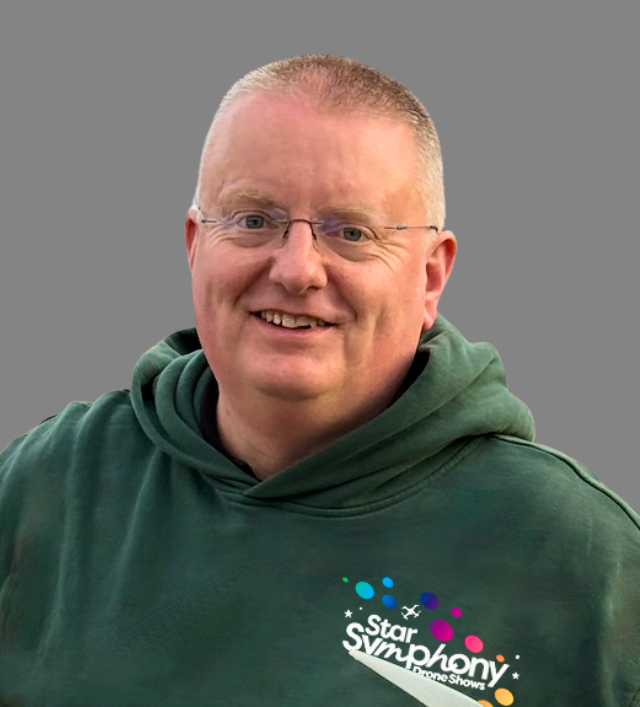
Name : Andy Hubble
Company: Star Fireworks LTD
Job Title: Managing Director
Topic Title: Fireworks, Drones and Technology – industry update
Personal Bio: Andy Hubble MIExpE is the Managing Director of Star Fireworks and Star Symphony Drone Shows. A long-standing Member of the Institute of Explosive Engineers, Andy has been immersed in the fireworks industry for over 30 years and has led Star Fireworks since 2002.Andy’s extensive career includes eight years as Chair of the trade association representing the professional display sector, as well as serving on the Council of the Institute, where he represented the firework industry. A highly skilled designer of award-winning firework displays, he also runs a specialist explosives consultancy service, primarily for the fireworks and pyrotechnics industries. His consultancy focuses on COMAH, storage, and transport regulations. Furthermore, Andy has acted as an expert witness in firework-related cases, providing evidence in serious criminal cases, including those involving manslaughter. He is also a surveyor for the leading firework and events insurance broker, Precision Broking. Star Symphony Drone Shows, an exciting venture from the Star Fireworks team, has transitioned from traditional firework displays to captivating drone light shows on a global scale. Their impressive portfolio includes performances across Dubai, Saudi Arabia, Ras Al Khaimah, Malta, Germany, the USA, and various locations throughout the UK. Star Symphony is proud to be one of the first companies to introduce pyro drones to the UK—drone light shows enhanced with small pyrotechnic displays, all fully authorised by the UK’s Civil Aviation Authority.
Abstract: TBC

Name : Andy Hogben & Steve Messam
Company: CHEMRING GROUP PLC
Job Title (Andy): CMM Managing Director
Job Title (Steve): Group Health and Safety Director
Topic Title: Learning from Incidents – A Chemring Perspective
Personal Bio Steve:

Name : Leo Smith
Company: DSTL
Job Title: OME Degree Apprentice
Topic Title: Dual Axis Centrifugal (DAC) Mixing for Solid Composite Rocket Propellants – An Apprenticeship Final Project
Bio: After the completion of his A-Level studies Leo chose to take an alternate path in further education and joined Dstl to complete a Level 6 Degree Apprenticeship in Ordnance Munitions and Explosives at the University of Wales Trinity Saint David. During his time at Dstl Leo has completed a number of rotational placements developing skills essential for working within the energetic industry. In his first year he worked on safety assurance for the long term storage and transport of a range of energetic articles. Then pivoting to a research and development role, Leo’s second placement allowed him to explore the use of artificial intelligence and machine learning for energetic material discovery and characterisation. In the third year of his apprenticeship, Leo completed an external secondment to Roxel UK gaining experience working within industry and knowledge on the analysis and characterisation of solid rocket propellants. Upon his return to Dstl Leo then moved to work on projects exploring novel energetic formulations and processing techniques. Here Leo has led Dstl’s efforts to explore Dual Asymmetric Centrifugal (DAC) mixing technologies, focusing on their application to the manufacture of composite rocket propellants. This research has become the focus of Leo’s apprenticeship final project which he is currently completing in preparation for his apprenticeship end point assessment in the spring of 2027. Leo intends to continue this research after his graduation to further support advanced in the manufacture of energetic materials.
Abstract: The United Kingdom’s 2025 Strategic Defence Review (SDR) outlined a requirement for increased lethality and an “always-on” munitions manufacturing capability. For energetic materials (EM) this necessitates the development of high performance formulations and novel methods to accelerate their manufacture. Mixing technologies dictate solid loading limits for EM formulations and significantly impacts manufacturing time, making this a key research focus. Whilst Resonant Acoustic Mixing (RAM) has emerged as a front runner the alternate technology of Dual Axis Centrifugal (DAC) mixing, also known as SpeedMixing, has received significant attention in the field of composite solid rocket propellant manufacture.
This research, completed to satisfy the requirements of the authors apprenticeship independent final project in Ordinance Munitions and Explosives at the University of Wales Trinity Saint David, aims to explore the use of DAC mixing for this application by delivering on the following research aims:
1. Develop an optimised DAC mixing process for a representative inert composite solid rocket propellant simulant formulation.
2. Characterise the batch-to-batch and scale-up variation within the DAC mixing process.
3. Compare RAM and DAC mixed materials to assess the impact on mechanical properties.
This presentation will outline the progress of this research, the challenges faces, recommendation for further work and the skills developed by the author to support their future career in the energetics sector.

Name : Quinn Dunbar
Company: DSTL
Job Title: OME Apprentice
Topic Title: Apprenticeship Final Project: Development of a tandem mass spectrometry method for the analysis of propellant stabilisers
Personal Bio: Quinn is an OME apprentice working at Dstl, having just completed their 5th year. They have worked in a number of capabilities across Dstl, such as energetic article management and robotics, but have now specialised into Chemical Analysis within the Forensics Explosives Laboratory.
Abstract: This talk covers the development and validation of a Ultra High performance liquid chromatography – tandem mass spectrometry (UHPLC-MS/MS) method for the quantification of stabilisers within propellant samples. As part of determining if a propellant is safe to store, it is necessary to analyse the stabiliser compounds present within the propellant formulation. Triple quadrupole tandem mass spectrometry offers advantages in the anlaysis of stabilisers over other methods as it allows for increased selectivity.
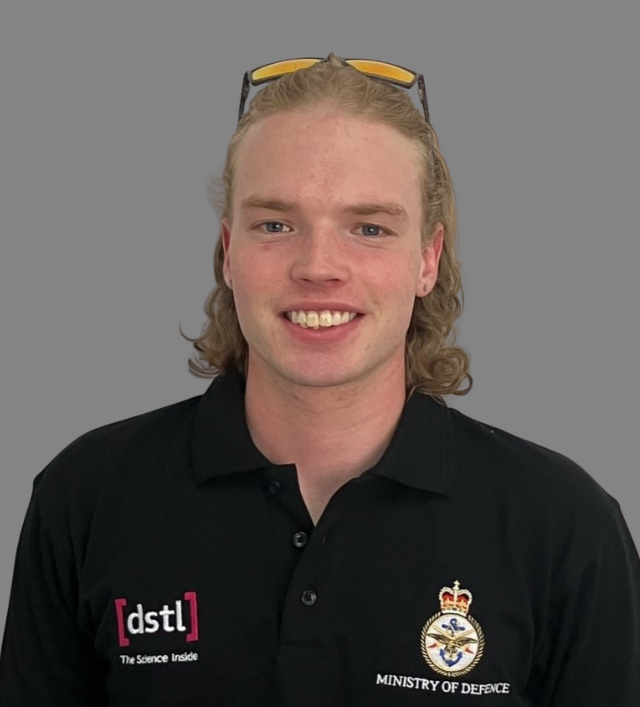
Name : Alex Lamdin
Company: DSTL
Job Title: OME Degree Apprentice
Topic Title: Bang in a Box: Evaluating the Behind-Target Effects of Shoulder-Launched Weapon Systems.
Personal Bio:
Alex has been employed at Dstl as an Ordnance Munitions and Explosives (OME) Engineering Degree Apprentice since September 2022. During this time, he has worked with a variety of teams across Dstl as well as completing an external secondment to Cranfield University’s COTEC. Now approaching the end of his apprenticeship, he has specialised in Test & Evaluation (T&E) of OME, in particular larger scale trials, and currently works in the Energetics Research & Assessment (ERA) delivery team supporting a variety of T&E activities. Outside of Dstl, Alex is also a Fireworks Firer and Pyrotechnician, and supports STEM learning opportunities in his spare time.
Abstract:
This talk showcases the complete development process of an apparatus and associated trial method for evaluating the behind-target performance of shoulder-launched weapon systems used against enclosed spaces.
This work was completed to meet a genuine business requirement but was also used as my final project/dissertation for my degree apprenticeship.
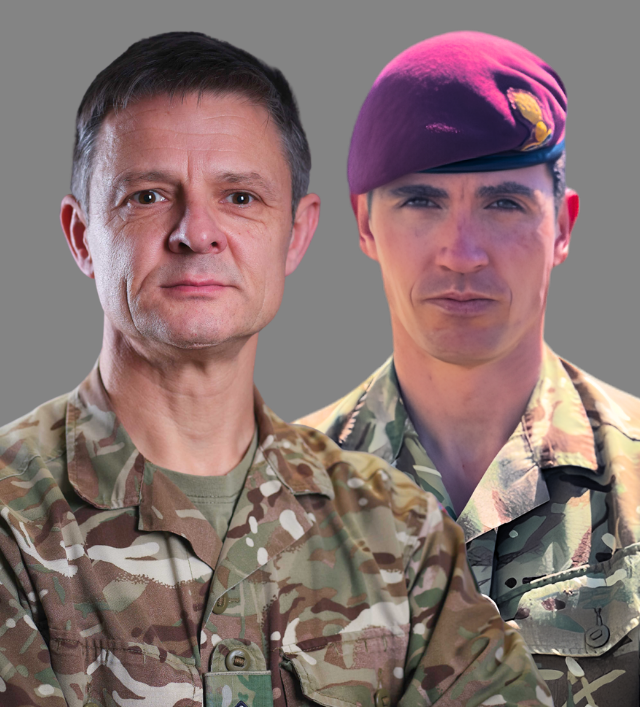
Name: Darren Fisher & Martin Sullivan
Company: MOD
Job title: Darren: Head Defence land Safety Regulator. Martin: SO2 Mil Cap EOD&S
Topic title: Reinventing the EOD wheel for the future battlefield
Bio: Brigadier Fisher joined the Army in 1993 as an Ammunition Technician and commissioned from the Royal Military Academy Sandhurst on 2000. He has served on operations in Northern Ireland, the Balkans, Iraq, Afghanistan and Cyprus. He is an EOD qualified ATO and has commanded on UK and abroad operations at every level from Troop Commander to command of 29 EOD and Search Group. He has held several OME related posts in DE&S, Military Capability Plans and was responsible for the Army’s ammunition inventory, including the recent increase in sovereign manufacture and delivery of munitions to the International Donor Coordination Centre. Brigadier Fisher is now the Defence Land Safety Regulator as part of the Defence Safety Authority in the Department of State.
Major Martin Sullivan is a Royal Engineers officer who has served in a wide variety of Combat Engineer and Explosive Ordnance Disposal & Search (EOD&S) appointments. Most recently, he served as the Chief of Staff, 29 EOD & Search Group, with responsibility for coordinating the activities of the Group, including the Technical Response Force (TRF). He is currently employed within Director Capability, Military Capability Plans, where he serves as the principal staff officer responsible for the development and delivery of Explosive Ordnance Disposal and Search capabilities in support of both warfighting operations and homeland resilience requirements
Abstract: Following decades of Counter IED operations the British Army is redesigning its approach to Counter EO on the modern battlefield. Generating mass and points of presence to be effective whilst adapting to counter new threats with emerging technology.

Name: Adam Mayo
Company: Cranfield Ordnance Test and Evaluation Centre (COTEC), Cranfield University
Job title: Assistant Trials Conducting Officer (TCO)
Topic title: Effect of Internal Water Liners on Energy Redistribution and Fragmentation Control in Cylindrical Warheads
Bio: Adam is an Assistant Trials Conducting Officer (TCO) at Cranfield Ordnance Test and Evaluation Centre (COTEC), where he supports the planning, coordination and delivery of Ordinance, Munitions and Explosives (OME) trials for defence, industry and research customers.
With more than five years of experience working within OME environments, Adam has contributed to fragmentation, Insensitive Munitions (IM), Hazard Classification and energetic material test programmes. His work includes trial delivery, instrumentation, diagnostic data capture and explosive safety management.
Adam graduated with a First-Class BEng (Hons) in Ordnance, Munitions and Explosives Engineering in 2026. His final-year research project investigated the effect of internal water liners on energy redistribution and fragmentation behaviour in cylindrical warheads. Combining controlled arena trials with high-speed diagnostics and analytical modelling, the study explored a novel approach to influencing fragmentation performance through fluid–structure interaction.
Abstract: Internal water liners offer a potential means of influencing fragmentation behaviour by modifying the transfer of detonation energy between the explosive charge and surrounding casing. However, the effects of thin internal water layers within cylindrical warheads remain poorly understood.
This study investigated the influence of water liner thickness on fragment velocity, mass distribution and fragmentation behaviour through a series of controlled arena trials. Fragment velocities were measured using make-foil diagnostics, fragment recovery was conducted using strawboard witness panels, and high-speed digital video was used to observe detonation and casing response. Experimental results were compared with theoretical predictions derived from the Gurney formulation.
The results demonstrated a consistent reduction in fragment velocity with increasing water liner thickness, accompanied by a decrease in fragment count and an increase in average fragment mass. These trends indicate that internal water liners act as an energy redistribution mechanism, altering explosive-casing interaction through energy redistribution and acoustic impedance effects rather than simply absorbing energy.
The findings highlight the potential of internal fluid layers as a practical method of influencing fragmentation performance without altering explosive composition or casing material, while also demonstrating limitations in the application of classical fragmentation models to fluid-interposed systems.

Name: Markus Plum
Company: Amprion GmbH
Job title: Project Manager
Topic title: Efficient ordnance clearance at BalWin1 & BalWin 2
Bio: I’m a highly trained Explosive Ordnance Disposal (EOD) Specialist with extensive experience in the management and delivery of EOD solutions on a range of large-scale national and international projects and programmes. My background as a Medieval and Post-medieval Archaeologist enables me to enhance my approach to Explosive Ordnance Disposal with the theories, methods, and practice of predictive and practical Archaeology. In addition to my work as Chief Operating Officer for commercial clearance companies, I’m qualified to deliver training in conventional EOD practices to national staff as well as conducting actual Render Safe Procedures.
https://www.linkedin.com/in/markus-plum-m-a-miexpe-miabti-958a3ab7/
Abstract: The clearance and disposal of explosive ordnance is an integral part of site preparation for Amprion GmbH projects.
Since the construction site risk also includes possible explosive ordnance in the ground, it must be ensured in advance of construction work that the site is free of explosive ordnance. To this end, the routes and building sites (including logistics areas, construction roads, etc.) of Amprion GmbH are first examined for potential explosive ordnance contamination using remote sensing. The results are then evaluated and the areas categorized. If areas are identified as suspected explosive ordnance sites, they are searched and subsequently cleared. The following presentation uses the BalWin1 & BalWin2 project as an example to illustrate the importance of explosive ordnance clearance/disposal in large-scale linear projects.

Name: Will Gilroy-Hirst
Company: Ministry of Defence
Job Title: OME Tech Lead
Talk title: Introducing Sustainability to UK Defence
Bio:
Will is an OME Technology Lead at the UK Ministry of Defence with over ten years of experience spanning academic and government roles. His academic credentials include a PhD in Defence and Security from Cranfield University in 2022, where he also worked as a Teaching Fellow covering environmental compliance and sustainable development within defence acquisition.
Chartered through the Institute of Explosives Engineers in 2025, Will specialises in integrating sustainability considerations into explosive ordnance and defence systems. His published research addresses decision-making frameworks for adopting sustainable alternatives in defence contexts. Balancing operational effectiveness with environmental responsibility remains central to his work bringing both technical depth and practical insight to discussions around modernising defence capabilities while meeting contemporary sustainability obligations.
Abstract: “Sustainability” has become ubiquitous in defence policy discourse, yet its practical meaning remains poorly understood. This talk provides a grounding of the concept in its three foundational pillars: the economic, social, and environmental and goes on to discuss the overlapping zones between each pillar:
• viable solutions balancing economics and environment,
• bearable outcomes addressing environmental and social needs,
• and equitable approaches serving economic and social interests.
These are not competing priorities but interdependent constraints requiring integrated decision-making and true sustainability emerges only at their intersection of all three zones. Intended for both industry practitioners and academic researchers, this presentation examines how these pillars apply specifically to the UK defence industry with a focus on the explosives sector.

Name: Thomas Appleby
Company: DSTL
Job Title: OME Degree Apprentice
Talk title: Apprenticeship Final Project – Development of ‘ScatterShot’ Type Flares
Bio: I am an Ordnance Munitions and Explosives Degree Apprentice Graduating in the summer of 2027 from the University of Wales Trinity Saint David. I have worked at Dstl for 5 years completing the apprenticeship, working in an array of teams. I also completed a 6-month external placement at Alford Technologies as part of my apprenticeship. I am currently in the Pyrotechnic Countermeasures team working on the development and testing of novel flare architectures.
Abstract: As part of my apprenticeship I have to make and deliver a presentation on a final project that I have to complete through work. This is something I am doing over the next year. My project will be on the development of a novel flare architecture, manufacturing a test batch and the testing of this design.

Name: Prof Rachael Hazael & Ed Clinton MBE
Company: Blast EcoShield Ltd
Job title: Rachael: Founder and Chief Executive Officer. Ed: Co-Founder and Chief Operating Officer
Topic title: Can Nature Stop a Bomb? Rethinking Protective Infrastructure for the 21st Century
Bio: Prof Rachael Hazael is pioneering the discipline of sustainable protective engineering: the integration of protection, sustainability and place-sensitive design to create safer, more resilient environments. She is Founder and CEO of Blast EcoShield and a Reader in Applied Materials at Cranfield University.
An internationally recognised expert in blast phenomena and material response, Rachael has published more than 60 peer-reviewed academic papers. She holds a PhD in Chemistry from University College London and is a Chartered Engineer and Member of the Institute of Materials, Minerals and Mining. Named one of the UK’s Top 50 Women in Engineering for her contribution to safety and security, she now leads the translation of sustainable protective engineering from scientific research into real-world protective infrastructure.
Ed Clinton MBE is Co-Founder and COO of Blast EcoShield and the former Head of the British Army’s Ammunition Technical trade, representing approximately 450 specialist ammunition technicians and explosive engineers. He has more than 20 years of global Explosive Ordnance Disposal experience and holds an MSc in Explosive Ordnance Engineering from Cranfield University.
Ed is a Chartered Engineer and Fellow of the Institute of Explosive Engineers, as well as a Chartered Manager and Fellow of the Chartered Management Institute. He was awarded the Queen’s Commendation for Bravery in 2016, the Harold Swinnerton Award in 2024 and an MBE in 2025 for services to bomb disposal. He brings extensive operational, technical and strategic experience across the wider CBRN EOD domain.
Abstract: For decades, blast protection has relied on steel, concrete and stand-off distances. While effective, these approaches are often expensive, carbon intensive, visually intrusive and increasingly difficult to integrate within modern urban and operational environments.
This presentation explores an alternative approach through the emerging discipline of sustainable protective engineering: the use of engineered living infrastructure to enhance safety, resilience and security. Drawing on research, testing and operational experience, it examines how carefully designed vegetation systems can contribute to blast mitigation whilst simultaneously delivering environmental, social and economic benefits.
Through the Blast EcoShield programme, a Cranfield University spin-out, the presentation will discuss the science underpinning nature-based blast protection, current development and validation activities, real-world applications across defence and civilian environments, and the opportunities and challenges associated with integrating living systems into protective design.
Saving lives, one leaf at a time, Blast EcoShield challenges conventional assumptions about how we protect people and places, asking whether the next generation of blast mitigation infrastructure may be grown rather than built.

Name: Poppy Dutton
Company: Frazer-Nash Consultancy Ltd
Job title: Sustainability and Environmental Assurance Engineer
Topic title: Environmental Acquisition: The Transition from ASEMS POEMS to AEMP
Bio: Poppy is an engineer in the Sustainability and Environmental Assurance (SEA) team at Frazer-Nash Consultancy Ltd (Frazer-Nash), specialising in environmental management and climate advisory services. Poppy joined the company in September 2024 after graduating from Lancaster University with a First-Class Bachelor of Science (BSc) degree in Geography and is a graduate member of the Institute of Sustainability and Environmental Professionals (ISEP).
Prior to joining Frazer-Nash, Poppy supported a number of low carbon technology decarbonisation projects across both healthcare and civil government sectors. Since joining Frazer Nash, she has applied knowledge of carbon standards and related methodologies including the Greenhouse Gas (GHG) Protocol and Science Based Target Initiative (SBTi) standards to industry sectors. In addition, she has delivered multiple projects in line with UK MOD standards, with a primary focus on the transition from Acquisition Environmental Management Systems (ASEMS) Project Oriented Environmental Management System (POEMS) towards the Acquisition Environmental Management Procedures (AEMP).
Abstract: At the end of 2025, National Armaments Director (NAD) Group published an update to ASEMS POEMS, now referred to as AEMP. This is held on the Knowledge in Defence (KiD) as part of the unified DE&S Safety Environmental Management Systems (SEMS). Poppy will share her knowledge on this topic, providing valuable insight at a time when demand for climate expertise in defence continues to increase and greater awareness of resilience begins to reshape priorities across the sector. AEMP plays a significant role in driving these changes.
The presentation will introduce AEMP for UK MOD projects, the importance of environment in acquisition projects and provide companies in the weapons industry with a greater understanding of MOD requirements to better align to their needs. It will share what has remained unchanged, what the key additions and removals are, and discuss the significance of these factors. Poppy seeks to achieve this through outlining how AEMP can support environmental management, regulatory compliance, risk and opportunity management, and the implementation of measures that improve adaptation and resilience to environmental challenges.
If permission is granted, Poppy will present real-world examples of how AEMP has been adopted in the weapons sector.

Name: Bob Roper & Jo Campbell-Waggott
Company: NAD Group
Job title: Bob: Inspector of Explosives. Jo: Head of Defence Munitions
Topic title: OME incidents and Human Factors influencing them
Bio: Bob Roper
Joining the RAF Armament trade in 1990 bob trained as a Small Arms Armourer and then worked within Explosive Storage Areas and then moved onto 5131 (BD) sqn before leaving in 2012. After completing a degree course Bob joined the Police and became an Authorised Firearms Officer specialising in the Anti-terrorist field before moving back to the civilian Explosives industry where he worked with several foreign nations including the Swiss, Belgium’s and The USA Missile Defence Agency and US Navy. Bob has been involved in In Service Weapon firings, Weapon Acceptance to Service Trials, OME Accident and Incident Investigations, UAV acceptance trials and the delivery of the At Sea Demonstration in 2015 and the subsequent Formidable Shield projects spending time at both Pacific Missile Range Facility (PMRF) in Hawaii and White Sands Missile Range in New Mexico. In 2021 Bob joined The MoD at Defence Munitions Beith before becoming the Inspector of Explosives for DE&S and Dstl which now both fall under the National Armaments Director Group.
Jo Campbell Waggott
Jo is Head of Weapons Support and Deputy Director within Defence Munitions, Ministry of Defence, where she leads a geographically dispersed team responsible for the safe storage, processing and out-loading of General Munitions and Complex Weapons across sites in the UK and Germany. As an Operational Duty Holder for risk-to-life activities, she is responsible for a broad portfolio encompassing safety, security, risk, finance, commercial delivery, infrastructure and workforce capability.
Jo began her career as a Police Officer before progressing through increasingly senior operational and leadership positions within HM Customs & Excise, HMRC, the Serious Organised Crime Agency (SOCA) and subsequently the National Crime Agency (NCA). Over more than three decades of public service, she has led complex organisations operating in high-risk, highly regulated and politically sensitive environments, building extensive experience in operational leadership, governance, risk management, organisational change and strategic capability development
Throughout her law enforcement career, Jo held a number of senior roles including Head of Profession for Armed Operations and Dedicated Surveillance Teams within the NCA, leading specialist teams delivering support to some of the UK’s highest priority investigations and operations. As a Tactical Firearms Commander and Post Incident Manager, she operated at the forefront of law enforcement’s response to serious and organised crime and contributed to major national operations. She also deployed to Afghanistan as an International Authorised Firearms Officer, where she mentored and supported the Counter Narcotics Police of Afghanistan.
Since joining Defence Munitions, Jo has focussed on transforming the culture and performance of the organisation to meet the increasing pace and demand generated by a rapidly changing global security environment. Through the introduction of a “One Team” vision and a “By Us For Us” approach, she has driven greater collaboration, standardisation and resilience across the enterprise, breaking down traditional silos and creating a more agile and responsive organisation
A Chartered Manager, Chartered Fellow of the Chartered Institute of Logistics and Transport and Associate Member of the Institute of Explosive Engineers, Jo is passionate about professional excellence, developing future leaders and strengthening the UK’s sovereign explosives and munitions capability.
Abstract: Dual presentation by the Defence Munitions 1 Star and the Inspector of Explosives NAD Group walking through the build-up of events to a recent OME incidents the incidents themselves and then the following investigations afterwards and the subsequent challenges faced over a protracted period of time to get back to business as usual with the implement changes to behaviour and process by staff and managers to prevent re-occurrence.

Name: William Critchley & Emma Biggs
Company: DSTL
Job title: OME Apprentices
Topic title: The Benefits of External Industrial Placements for OME Apprentices
Bio: Will: I’m a Ordnance Munitions & Explosives engineering degree apprentice at Dstl graduating in the summer of 2028. As a part of my apprenticeship I undertook an external placement at the Cranfield Ordnance Test and Evaluation Centre (COTEC) in the summer of 2025. I am placed in the Explosive Render Safe Techniques team, conducting work on developing tools and RSP’s for EOD operators.
Emma: Like Will, I am also an Ordnance, Munitions and Explosives engineering degree apprentice graduating in the summer of 2028. Through the STEM Futures Programme I partook in an external placement to the UK Atomic Energy Authority’s centre for Remote Applications in Challenging Environments (UKAEA RACE). I am currently working within Dstl’s Energetic Threat Characterisation Team to implement robotic remote handling solutions into energetic work flows.
Abstract: This talk will cover the learning experiences provided by external placements undertaken by myself and Emma through the STEM Futures Programme as a part of Government Science. I will discuss my placement at the Cranfield Ordnance Test and Evaluation Centre (COTEC) where I worked alongside their experienced TCO’s and range staff to gain a better understanding of explosive handling and range work. Emma will talk about her experience at the UK Atomic Energy Authority’s Centre for Remote Applications in Challenging Environments (UKAEA RACE), aiding in the development of robotic remote handling operational SQEP within the Energetic Sector.

Name: Lisa Humphreys
Company: Cranfield University
Job title: Senior Lecturer in Formulation Chemistry
Topic title: Nurturing a Resilient WOME Workforce
Bio: Lisa is a Senior Lecturer in Formulation Chemistry within the Cranfield Defence and Security Theme at Cranfield University, Shrivenham which is based at the Defence Academy of the UK. She gained her PhD from the University of Southampton in 2015 in ‘Mixing and Characterisation of Multi-Component Materials for Pyrotechnic Applications’ and is a Chartered Chemist with the Royal Society of Chemistry (RSC). She is responsible for the development and delivery of research and education in energetic materials across a wide variety of courses most notably the Explosives Ordnance Engineering (EOE) MSc. She has taught on various modules within this course for 10 years and in 2024 progressed to the role of EOE Course Director.
Her research focus is driven by her passion to develop sustainable pyrotechnic compositions whilst concurrently exploring the manner in which they are created and finally assembled. Lisa is also developing new metal organic frameworks (MOFs) for both detection purposes and for the generation of novel energetic materials.
Lisa supervises numerous MSc and PhD students whilst supporting the wider energetics community by being part of the ESSG Skills and Competence Working Group (SCWG). She is a co-hub lead for the Centre of Excellence in Energetic Materials (CoEEM) Formulation, Manufacturing and Processing (FM&P) Hub and the Weapons, Ordnance, Munitions and Explosives (WOME) Hub lead for the STEM Futures Knowledge Exchange scheme.
Abstract: As we look to restore, retain and revitalise sovereign Weapons, Ordnance, Munitions and Explosives (WOME) capability, we must be strategic not only in the infrastructure we develop, but in the people and expertise required to sustain it. Investment in Suitably Qualified and Experienced Personnel (SQEP) must therefore progress concurrently with investment in facilities and capability. Without this balance, we risk creating infrastructure without sufficient expertise to deliver or placing increasing demands on an already stretched workforce. This talk aims to shed light on various strategies that can enable upskilling of individuals in the WOME profession and beyond.
Developing SQEP is fundamental to sustaining a positive safety culture. Creating an environment in which individuals and teams feel respected, challenged and valued supports a resilient workforce that is equipped to meet the evolving needs of defence. Central to this is the effective transfer of knowledge and experience from subject matter experts (SMEs) to current and future generations of WOME professionals.
Within WOME, however, knowledge transfer is rarely as straightforward as the familiar training mantra of ‘see one, do one, teach one’. The diversity, complexity and hazardous nature of our activities mean that expertise is developed through a combination of underpinning knowledge, practical experience, professional judgement and mentorship. We therefore need effective mechanisms to capture and share SME knowledge across disciplines, organisations and generations, while recognising that individuals engage with and apply learning in different ways.
By embracing multiple approaches to learning, creating opportunities to learn from one another, and ensuring that specialist knowledge is retained and transferred, we can build a safer, more capable and resilient WOME workforce.

Name: Gareth James
Company: DSTL
Job title: Apprentice
Topic title: Apprenticeship Final Project – Rapid Vehicle Access

Name: William Proud
Company: Centre for Active Resilience and Security, Imperial College London
Job title: Associate Professor in Shock Physics
Topic title: AI and the role of the Expert

Name: Samuel Yeap
Company: Frazer-Nash Consultancy
Job title: Consultant
Topic title: The Modelling of Dynamic Events using the Impetus Solver
Bio: A Consultant within the Energetics & Vulnerability team at Frazer-Nash; Sam has a background in both static and dynamic numerical analysis techniques. These include the terminal ballistics modelling of high velocity impacts on armour materials, as well as the effects of blast and shock on structures. This work has been conducted on numerous finite element packages such as LS-Dyna, Ansys, Impetus, and Abaqus.
Abstract: TBC

Name: Tommy Lodge
Company: University of Sheffield
Job title: Lab Manager
Topic title: How loud is too loud? – Blast noise prediction on an small scale explosive test site.
Bio: I graduated from The University of Sheffield with an MPhys degree in Physics in 2012 and then spent a number of years working in industry before returning to the University as Lab Manager for the Blast and Impact Dynamics Group’s research lab in Buxton.
I am responsible for the day to day running of the lab, working closely with industry partners to deliver complex research projects and testing regimes in a safe environment.
In 2025 I completed my PhD at the University of Sheffield looking to understand the effects different soil conditions have on the loading due to a buried charge.
Abstract: TBC

Name: Rebecca Dingwall
Company: DSTL
Job title: Ordnance Munitions and Explosives degree apprentice
Topic title: CB Weapon Construction Exploitation Using X-ray Fluorescence
Bio: I am an Ordnance Munitions and Explosives Degree Apprentice Graduating in the summer of 2027 from the University of Wales Trinity Saint David. I have worked at Dstl for 8 years completing the degree apprenticeship, and a previous L3 mechanical engineering apprenticeship with dstl too.
My time at dstl has been in a variety of teams, the teams that impacted me the most were the teams working with explosives and separately the teams working with chemical and biological weapons. My current team is the chemical and biological attribution and analysis team where I am a weapons analyst. This role combines both of my interests of explosives and chemical weapons.
Abstract: The forensic exploitation of post-blast scenes in Ordnance, Munitions and Explosives (OME) operations is critical for technical intelligence, attribution, safety assessments, and the reconstruction of events involving conventional and chemical and biological (CB) munitions. Rapid, non-destructive analytical techniques are particularly valuable in these high-risk environments where traditional laboratory methods may be impractical or time-consuming. X-Ray Fluorescence (XRF) spectroscopy offers a promising portable and field-deployable capability for elemental analysis; however, its application remains underexplored in key areas of OME forensics.
Most of the work currently published using XRF looks at explosive residues; however, very little work refers to metal munition fragments in post energetic events. This project will focus on the use of XRF technology as a means of post blast, CB weapon construction analysis and exploratory research into wider exhibit exploitation using XRF technology.













Ground Floor - Unit 1, Greyfriars
Business Park, Frank Foley Way,
Stafford, England, ST16 2ST